
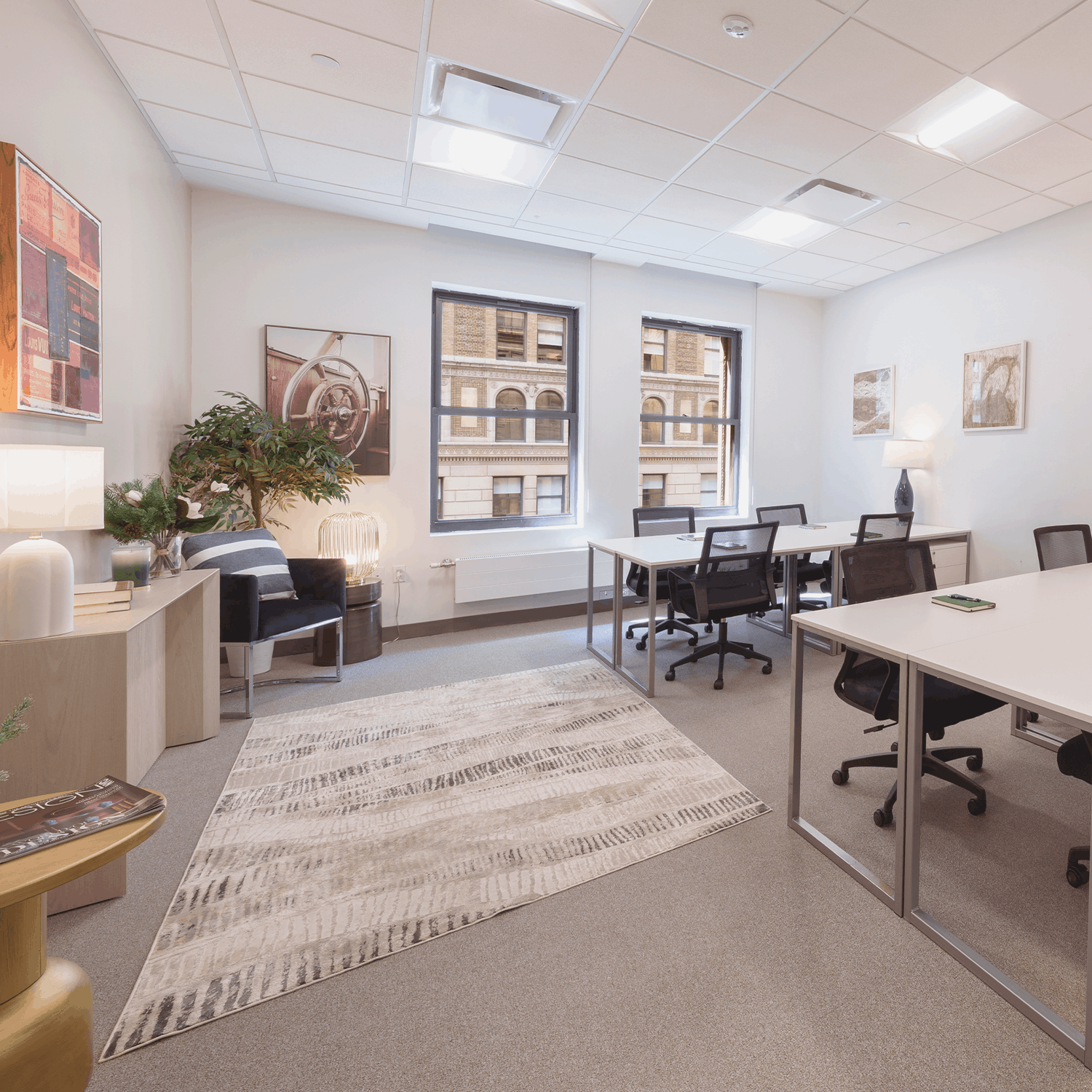
As businesses grow, their workspace needs often change just as quickly as their headcount.
What works for a solo entrepreneur or a two-person startup may no longer be the right fit once new employees join the team, client meetings become more frequent, and collaboration becomes a daily part of the business.
For many companies in New York City, the question isn’t whether they need office space—it’s whether a
coworking space or a private office is the better choice.
The answer depends on several factors, including your team’s size, the type of work you do, your growth plans, and the experience you want to create for both employees and clients.
If you’re evaluating your options, here’s what growing businesses should consider before making the move.
Many successful companies begin with a simple setup.
A founder may work from home, spend a few days each week in a coworking space, or occasionally rent a meeting room when clients visit.
In the early stages, flexibility and affordability are often the highest priorities. As the business grows, however, new challenges begin to emerge.
Employees need space to collaborate.
Managers require private areas for interviews and performance discussions. Sales teams spend more time on client calls.
Leadership meetings become more frequent.
What once felt like an efficient workspace may suddenly feel crowded, noisy, or limiting. That’s why many businesses eventually begin exploring private office space.

Coworking continues to be one of the most popular workspace solutions in New York City—and for good reason.
For startups and small businesses, it offers flexibility that’s difficult to match with traditional office leases. Some of the biggest advantages include:
Coworking also allows businesses to scale gradually.
Instead of committing to a larger office immediately, companies can add memberships as new employees join the team.
For businesses still testing new markets or building their customer base, that flexibility can be extremely valuable.
One of coworking’s biggest strengths is its community.
Unlike traditional office buildings where businesses rarely interact, coworking environments naturally encourage conversations between entrepreneurs, freelancers, consultants, designers, marketers, developers, and other professionals.
Those interactions often lead to:
For founders building their networks, these relationships can become just as valuable as the workspace itself.
As businesses continue hiring, coworking can eventually present new challenges.
Team members may find themselves spread throughout a shared workspace instead of working together. Phone calls become more frequent.
Confidential conversations become more difficult. Employees compete for meeting rooms.
Maintaining a consistent company culture also becomes more challenging when everyone works in a shared environment.
While coworking offers tremendous flexibility, growing teams often begin seeking greater privacy and control.
A private office provides your business with dedicated space that belongs entirely to your team.
Employees work together in one location while still enjoying the flexibility and amenities offered by modern workspace providers.
This arrangement creates several important advantages.
When everyone shares the same office, communication becomes much more natural. Quick questions don’t require messaging apps.
Brainstorming sessions happen spontaneously. Managers remain accessible throughout the day.
Instead of feeling like individuals sharing a building, employees begin functioning more like a cohesive team.
For growing businesses, that increased collaboration often leads to better productivity and stronger company culture.
Privacy becomes increasingly important as businesses expand. Growing companies regularly discuss:
Having these conversations in a shared coworking environment isn’t always ideal.
Private offices provide a secure setting where teams can communicate openly without worrying about nearby conversations.
This is especially valuable for attorneys, consultants, financial advisors, recruiters, healthcare professionals, and other businesses that routinely handle confidential information.
Your office says a lot about your business.
When clients visit, they’re not just evaluating your products or services—they’re evaluating your company. A dedicated office creates a more consistent and professional experience.
Instead of meeting in shared common areas, clients enter a workspace that’s designed specifically for your business.
That level of professionalism helps build confidence and trust.
As companies begin working with larger clients, that first impression can become increasingly important.
Every business wants employees to do their best work.
While coworking spaces offer energy and collaboration, they can also bring distractions. Phone calls.
Conversations. Networking events. Shared work areas.
For some professionals, that atmosphere is motivating. For others, it makes focused work much more difficult.
Private offices provide greater control over the work environment, allowing businesses to create spaces that support concentration while still encouraging teamwork.
Many people assume coworking is always the less expensive option. That may be true for individuals or very small teams.
As businesses grow, however, the math begins to change.
Multiple coworking memberships, dedicated desks, and frequent meeting room reservations can quickly add up.
At some point, a private office often becomes surprisingly competitive in price.
When you also consider the added privacy, productivity, branding, and collaboration benefits, many businesses conclude that the additional investment delivers significantly greater value.
Rather than comparing monthly rent alone, businesses should evaluate the overall return on investment.
The good news is that choosing between coworking and private offices doesn’t always have to be an either-or decision.
Many successful businesses combine multiple workspace solutions. For example:
This flexible approach allows businesses to adapt as their workforce changes while avoiding unnecessary overhead.
If you’re deciding between coworking and a private office, consider asking yourself:
Answering these questions often makes the decision much clearer.
Many of today’s most successful companies started in coworking spaces.
Those environments provide flexibility, affordability, and valuable networking opportunities during the early stages of growth.
As businesses mature, however, their priorities often shift. Privacy.
Productivity. Company culture. Client experience. Team collaboration.
These factors frequently make a private office the natural next step.
Fortunately, many flexible workspace providers offer both coworking and private office solutions, allowing businesses to transition without changing locations.
Every business grows differently, and there’s no single solution that’s right for everyone.
Some companies thrive in coworking environments for years, while others quickly discover that a dedicated office better supports their long-term goals.
The key is choosing a workspace that aligns with how your team works today while giving you the flexibility to adapt tomorrow.
At Le Parc Offices, businesses have access to coworking memberships, private offices, dedicated desks, meeting rooms, and virtual office solutions in the heart of Manhattan’s Park Avenue South business district.
Whether you’re just starting out or leading a rapidly growing team, having the right workspace can make a meaningful difference in your company’s productivity, culture, and future success.
If you’re exploring coworking in NYC or looking for a private office in Manhattan, schedule a tour to discover which workspace solution is the best fit for your growing business.
